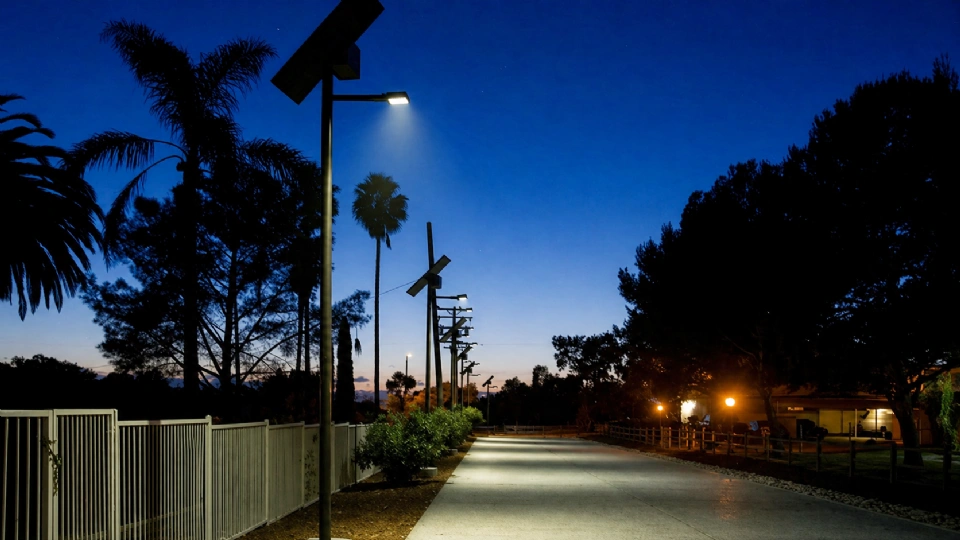
All-in-One vs All-in-Two Solar Street Lights
All-in-one integrates the panel, battery, controller, and LED into one compact unit for the fastest, lowest-cost install; all-in-two separates the panel so it can be larger and optimally aimed, with a bigger battery — better for higher output, northern latitudes, and shaded sites. This guide compares them and shows how to choose.
The two form factors
| Factor | All-in-one | All-in-two |
|---|---|---|
| Install | Fastest | More steps |
| Cost | Lower | Higher |
| Output | Moderate | Higher |
| Climate | Sunny | Tough / northern |
| Panel aiming | Fixed/integrated | Optimized separately |
How to choose
All-in-one wins on simplicity and cost where sun is plentiful and output needs are moderate. All-in-two wins where you need more output, northern/shaded performance, or a larger battery, because the panel can be sized and aimed independently. The decision follows the site's required light level, latitude, and shading.
360 Solar options
360 Solar offers both — the Galaxia series in all-in-one and all-in-two configurations, and Titan as an all-in-two system for higher output and tougher climates.
Frequently asked questions
What's the difference?
All-in-one is integrated and fast; all-in-two separates the panel for higher output.
Which is better for the north?
All-in-two — larger, optimally aimed panel and bigger battery.
Is all-in-one cheaper?
Usually, and faster to install, best for sunny/moderate-output sites.
Ask which form factor fits your site at 360solarlighting.com/free-quote.