Cold-Climate Solar Lighting: Snow, Cloud & Winter Sizing
Cold-climate solar lighting overcomes three winter challenges at once — less sunlight, snow on the panel, and reduced battery capacity — through worst-month sizing, steep snow-shedding tilt, and cold-tolerant batteries. Get these right and a system runs reliably through a northern winter; get them wrong and it fails in February. This guide covers each.
Three winter challenges
Less sun: shorter days and lower angles, so worst-month sizing with a larger panel/battery ratio is essential.
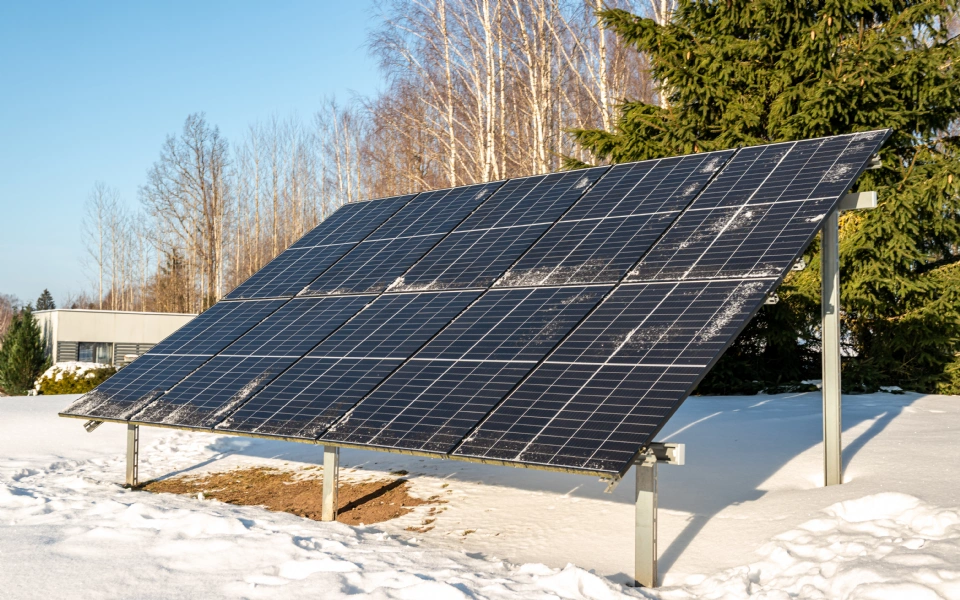
Snow: a steep tilt (latitude + ~10–15° or more) sheds snow and captures low winter sun.
Cold batteries: reduced capacity and, for lithium, no charging below freezing without protection — so choose cold-tolerant chemistry and derate.
Structure
Poles, brackets, and panels must handle snow/ice loads and winter wind per the structural standard, and components are rated for the low-temperature extreme.
The key point
A system that works in Florida won't necessarily work in Minnesota. Cold-climate reliability is an engineering outcome — worst-month sizing, snow-shedding tilt, cold-tolerant batteries — not an assumption. 360 Solar designs explicitly for cold climates.
Frequently asked questions
Do solar lights work in winter?
Yes, when sized to the worst month with autonomy, steep tilt, and cold-tolerant batteries.
How does cold affect solar?
Less sun, snow on panels, and reduced battery capacity — the design answers each.
What tilt is best for snow?
Steep — latitude + ~10–15° or more — to shed snow and capture low sun.
Request a cold-climate design at 360solarlighting.com/free-quote.