How to Size a Solar Lighting System: Panel, Battery & Runtime
Sizing a solar lighting system follows three steps: calculate the nightly load, size the battery for that load times the autonomy days at a safe depth-of-discharge, and size the panel to recharge it using the site's worst-month peak sun hours. Get these right and the light runs all night, year-round; skip the worst-month and autonomy steps and it fails every winter.
Step 1 — Nightly load
Watt-hours per night = fixture wattage × operating hours, adjusted for any dimming or motion profile. Reducing output during low-traffic hours lowers the load and therefore the system size.
Step 2 — Battery
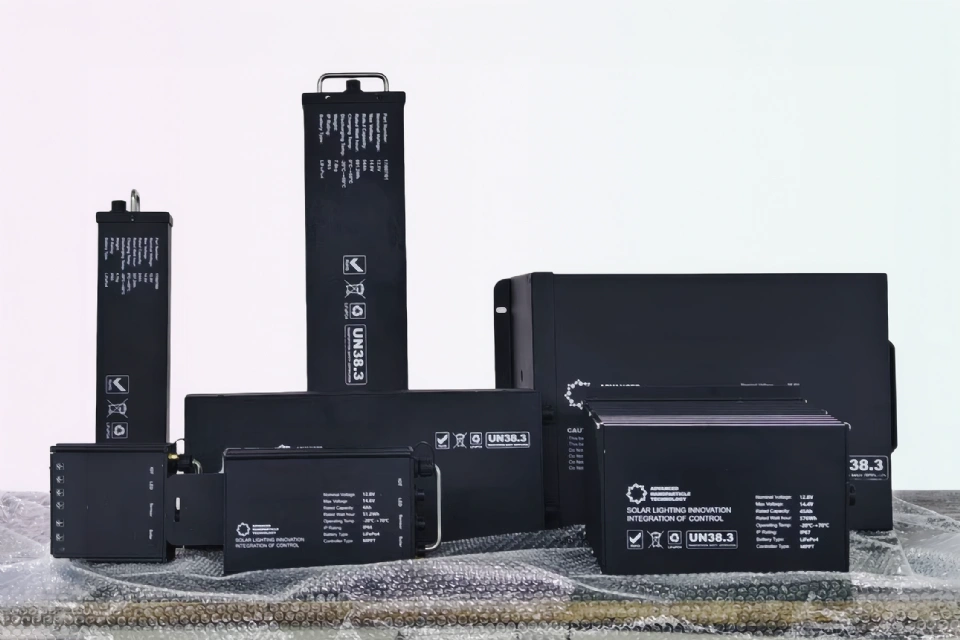
Battery capacity = (nightly load × autonomy days) ÷ allowable depth-of-discharge, with temperature derating. Conservative depth-of-discharge multiplies cycle life, which is why proper sizing extends battery service life. Autonomy is typically 3–5 days, more for critical or northern sites.
Step 3 — Panel
Panel wattage ≈ daily load ÷ (worst-month peak sun hours × system efficiency), with derates for the controller, wiring, battery round-trip efficiency, and soiling. Sizing on the worst month — not the annual average — is what prevents winter failures.
Why latitude changes everything
Solar resource drops sharply in winter at higher latitudes; the same fixture needs a substantially larger panel and battery in the Upper Midwest than in the Sun Belt. Applying a sun-belt spec to a northern site is a classic failure mode.
Engineered vs catalog
Catalog products quote a generic wattage regardless of location. Engineered sizing uses the site's worst-month solar resource, real load, and autonomy — guaranteeing year-round operation. 360 Solar performs this engineering for every project.
Frequently asked questions
How do you size a solar lighting system?
Load → battery (autonomy + depth-of-discharge) → panel (worst-month sun).
What is worst-month sizing?
Sizing to the lowest-sun month relative to the load, not the annual average.
How many days of autonomy?
Typically 3–5; 5+ for critical or northern sites.
Why do cheap solar lights fail in winter?
They ignore the worst month, latitude, and real losses, so the battery never fully recharges.
Request a sizing study at 360solarlighting.com/free-quote.