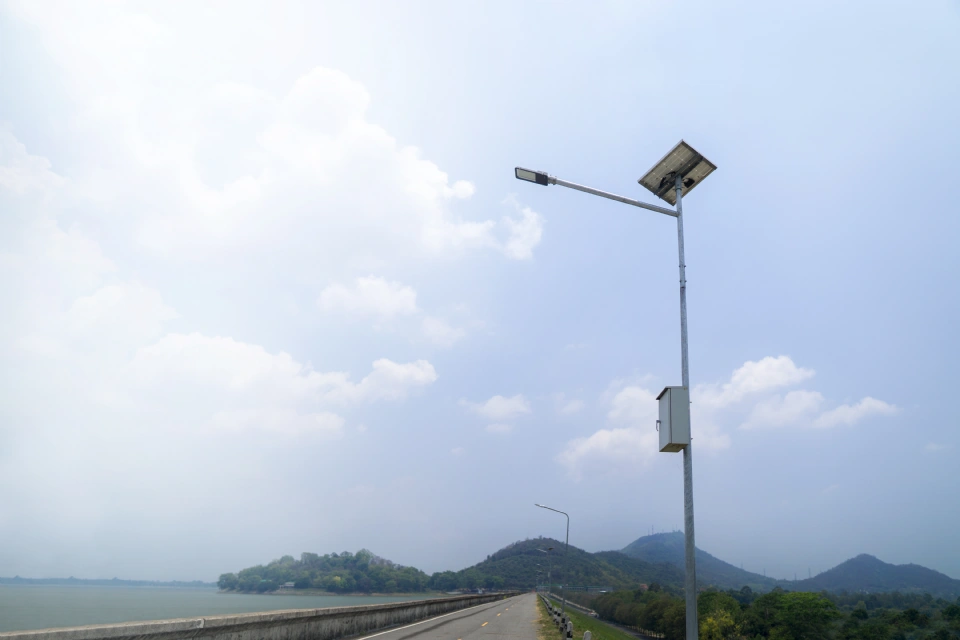
Hybrid Solar + Grid Lighting Systems
Hybrid solar-plus-grid lighting combines solar's savings with grid backup for the highest reliability — letting the battery be sized to typical conditions (not the absolute worst case) with the grid as insurance, and providing outage ride-through. It's ideal for critical sites, or where grid exists but is unreliable or costly to extend. Hybrid is the answer when pure off-grid would require an expensively large battery to cover rare worst-case stretches, and pure grid would forfeit solar's savings and resilience.
This guide covers when hybrid fits, the two architectures, and how it right-sizes the battery.
When hybrid fits
Three situations point to hybrid. First, where pure off-grid sizing for extreme worst cases is costly — covering a rare multi-week cloudy stretch entirely on battery can demand an oversized, expensive system. Second, where a site is mission-critical and can't tolerate any risk of going dark. Third, where grid is nearby but full extension is expensive — hybrid uses the available grid as backup without paying to run full service everywhere. In each, hybrid balances reliability and cost better than either pure approach.
Two architectures
| Architecture | How it works |
|---|---|
| Solar-primary, grid backup | Solar/battery carry the load; grid tops up the battery in extended low-sun periods — smaller battery than pure off-grid |
| Grid-primary, solar assist | Grid powers the fixture while solar offsets cost and provides outage ride-through |
Solar-primary with grid backup keeps the system mostly off-grid, drawing on the grid only to top up the battery during extended low-sun periods — which means the battery can be smaller (and cheaper) than a pure off-grid system designed for the worst case. Grid-primary with solar assist runs the fixture on grid power normally, with solar offsetting energy cost and providing ride-through when the grid fails.
How hybrid right-sizes the battery
The core advantage is battery economics. A pure off-grid system must carry a battery big enough for the worst case — the longest plausible run without sun. A hybrid system sizes the battery to typical conditions and lets the grid handle the rare extremes, which often lowers total cost for high-reliability needs while still delivering resilience and outage ride-through. You get most of solar's savings, full reliability, and a smaller battery. 360 Solar designs hybrid architectures where the site justifies them.
Frequently asked questions
What is a hybrid solar + grid lighting system?
It combines solar's savings with grid backup, sizing the battery to typical conditions with the grid as insurance and providing outage ride-through — ideal for critical sites or unreliable/costly-to-extend grid.
When does hybrid make sense?
Where pure off-grid worst-case sizing is costly, the site is mission-critical, or grid is nearby but full extension is expensive.
What are the two architectures?
Solar-primary with grid backup (smaller battery, grid tops up in low sun) and grid-primary with solar assist (grid powers the fixture, solar offsets cost and adds ride-through).
How does hybrid lower cost?
By right-sizing the battery to typical rather than worst-case conditions, often lowering total cost for high-reliability needs while still providing resilience.
Does hybrid still save energy?
Yes — solar carries most of the load or offsets grid energy, so you keep most of solar's savings while gaining grid-backed reliability.
Ask whether a hybrid system fits your project. Get a free assessment at 360solarlighting.com/free-quote.