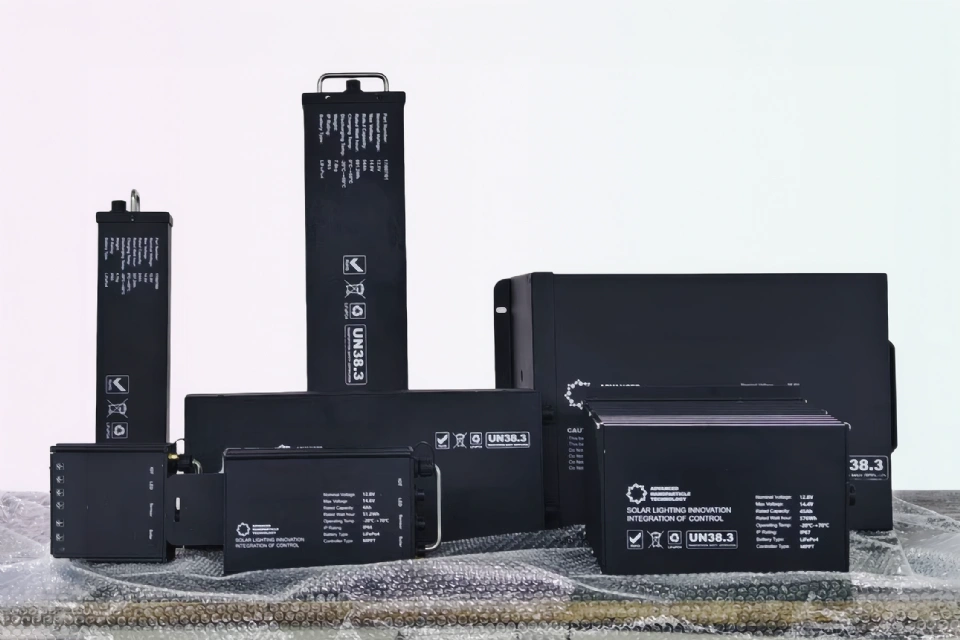
LiFePO4 vs NiMH for Solar Lighting
LiFePO4 offers higher energy density, long cycle life (2,000–4,000+ cycles), and good overall temperature tolerance, making it the default for most commercial solar lighting. NiMH excels in extreme cold and is very safe, but has lower energy density and shorter life. The choice depends on climate and project life.
This comparison helps you choose the chemistry.
At a glance
| LiFePO4 | NiMH | |
|---|---|---|
| Density | High | Lower |
| Cycle life | Long (2,000–4,000+) | Shorter |
| Cold | Good (needs low-temp charge protection) | Excellent, charges sub-freezing |
How to choose
Choose LiFePO4 for the best all-around life and density — it's the default for most commercial solar lighting, performing well in cold with low-temperature charge protection. Choose NiMH where the site sees sustained extreme cold and its excellent cold tolerance and safe sub-freezing charging are decisive. For the large majority of US commercial sites, LiFePO4's longevity and density make it the better lifecycle choice; NiMH is the specialist answer for the coldest climates.
Frequently asked questions
LiFePO4 or NiMH for solar lighting?
LiFePO4 for higher density and long life (the default); NiMH for sustained extreme cold. The choice depends on climate and project life.
When should I choose LiFePO4?
For best all-around life and density, with low-temperature charge protection in cold climates.
When should I choose NiMH?
Where sustained extreme cold makes its cold tolerance and safe sub-freezing charging decisive.
Which lasts longer?
LiFePO4 generally — NiMH's advantage is extreme-cold performance, not longevity.
Does LiFePO4 work in cold at all?
Yes, well — it just needs low-temperature charge protection to avoid charging below freezing.
Ask which chemistry fits your climate. Get a free design at 360solarlighting.com/free-quote.