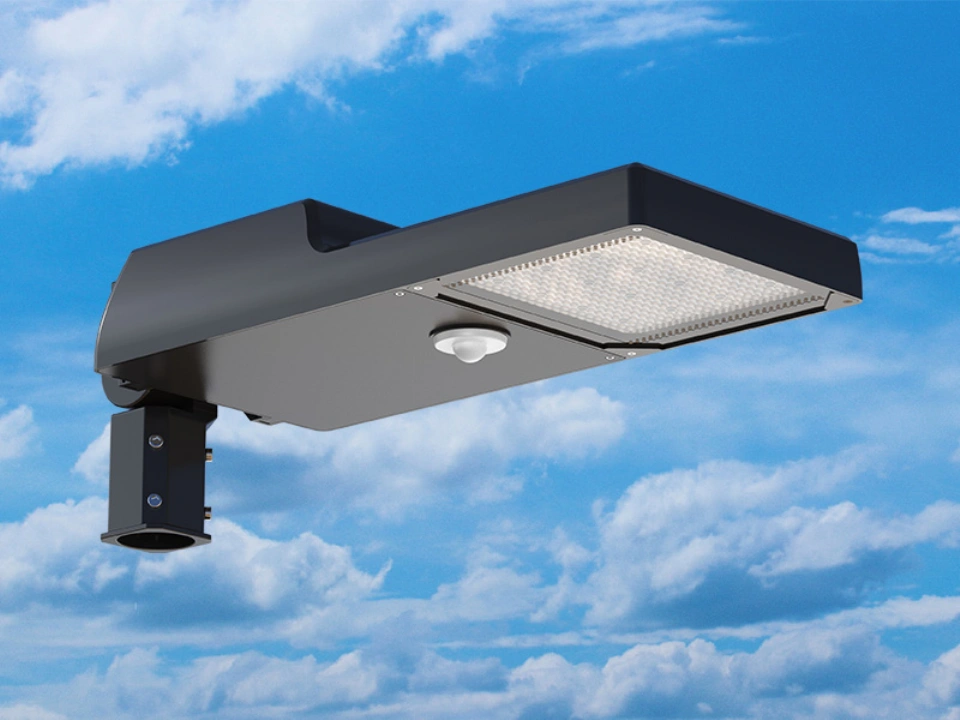
Motion Sensors & Smart Dimming in Solar Lighting
Motion sensors and smart dimming let solar lights run at a low standby level and boost to full output on detection, dramatically cutting the nightly load — which allows a smaller, cheaper solar system or more autonomy — while still providing full light and deterrence exactly when people or vehicles are present. It's one of the most cost-effective levers in solar lighting: you pay for the light you actually use, not for full brightness over empty space all night.
This guide explains how the savings work, where motion control fits, and how baselines keep safety intact.
How it saves
The math is favorable. A light dimmed to standby for most of the night draws only a fraction of full-output energy, and the brief boosts when motion is detected add very little to the total. The result is a 30–50% cut in average nightly load. Because the nightly load is what drives solar system size, that reduction translates directly into either a smaller, cheaper panel and battery for the same performance, or more autonomy for the same hardware — a major lever on both cost and reliability.
Where it fits
| Site | Why motion fits |
|---|---|
| Parking lots | Intermittent vehicle and foot traffic |
| Pathways | Occasional pedestrian use |
| Low-traffic streets | Long quiet stretches overnight |
| Security perimeters | Standby plus boost deters intruders |
| Campuses | Variable activity across the night |
The common thread is intermittent traffic — places where, for most of the night, there's no one to light for. That's exactly where standby-plus-boost captures the biggest savings without anyone noticing a difference when they arrive.
Preserving safety
Motion control doesn't mean dark spaces. Fixtures hold a low standby light level rather than switching fully off, and they boost to full output on detection, so an arriving person or vehicle is always met with full light. Safety-critical areas keep a higher baseline so they never dip below a safe level. Sensors integrate with the controller and can tie into smart-pole systems, and the dimming profile is tuned to each site's activity pattern. 360 Solar tunes these profiles per site to balance savings and safety.
Frequently asked questions
How do motion sensors save energy?
A light dimmed to standby most of the night uses a fraction of full-output energy, and brief motion boosts add little — cutting average load 30–50% to shrink the system or extend autonomy.
Where do motion sensors and dimming fit?
Parking lots, pathways, low-traffic streets, security perimeters, and campuses — anywhere traffic is intermittent. Safety-critical areas keep a higher baseline.
How much can they reduce system size?
By cutting average nightly load 30–50%, allowing a smaller, cheaper panel and battery, or more autonomy for the same hardware.
Does motion dimming leave areas dark?
No — fixtures hold a low standby level and boost to full on detection, and safety-critical areas keep a higher baseline.
Can motion sensors tie into smart poles?
Yes — sensors integrate with the controller and can connect to smart-pole systems for coordinated operation.
Ask about motion and dimming options with a free certified solar design. Get it at 360solarlighting.com/free-quote.