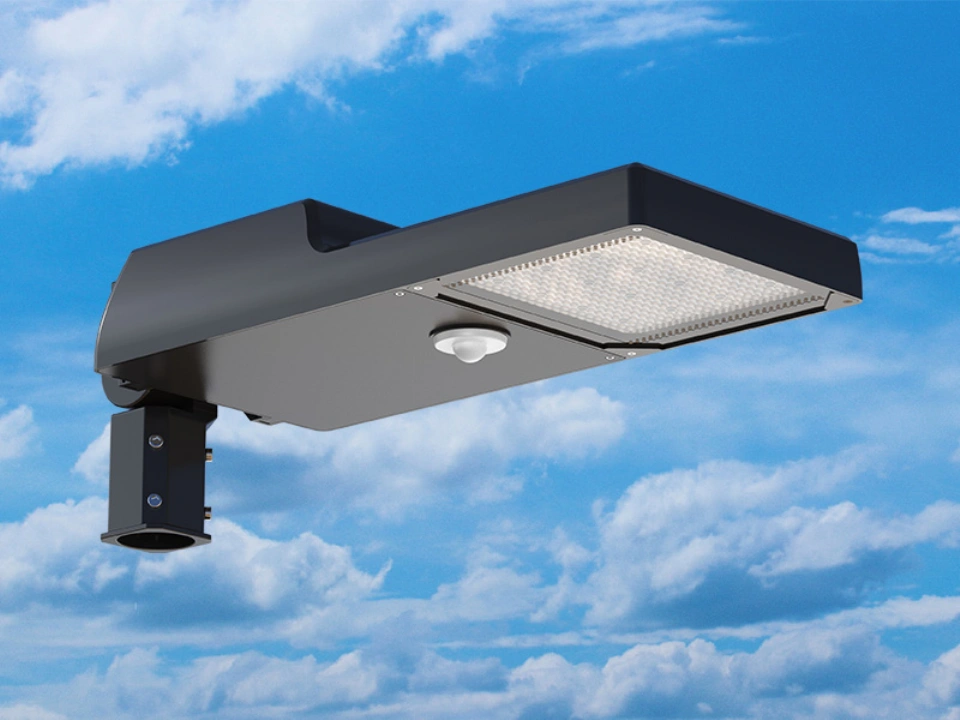
Motion-Sensor vs Dusk-to-Dawn Solar Operation
Dusk-to-dawn keeps lights at full output all night — best for safety-critical areas — but needs more battery and panel. Motion-sensor (adaptive) operation dims to low output and boosts on detection, dramatically cutting energy use and allowing a smaller, cheaper system. Many sites combine both: a dimmed baseline with motion boost.
This comparison helps you choose the operating profile.
At a glance
| Dusk-to-dawn | Motion / adaptive | |
|---|---|---|
| Output | Constant full light | Low standby, boost on motion |
| System size | Larger | Smaller |
| Best for | Safety-critical areas | Intermittent-traffic sites |
How to choose
Choose dusk-to-dawn where constant full lighting is required — safety-critical areas that must stay fully lit all night — accepting a larger battery and panel. Choose motion/adaptive for efficiency and a smaller, cheaper system on intermittent-traffic sites like lots, paths, and low-traffic streets, where dimming most of the night cuts the load 30–50%. And combine both where it fits: a dimmed baseline (meeting a safe minimum) with motion boost on detection captures most of the savings without leaving anyone in the dark. 360 Solar tunes the profile per site.
Frequently asked questions
Motion-sensor or dusk-to-dawn solar?
Dusk-to-dawn for constant full light in safety-critical areas (larger system); motion/adaptive for energy savings and a smaller system on intermittent-traffic sites. Many combine both.
When should I choose dusk-to-dawn?
Where constant full lighting is required, accepting a larger battery and panel.
When should I choose motion/adaptive?
For efficiency and a smaller system on lots, paths, and low-traffic streets.
Can I combine both?
Yes — a dimmed baseline with motion boost preserves a safe minimum while capturing most savings.
How much does adaptive operation save?
Cutting average load 30–50%, allowing a smaller system or more autonomy.
Ask about operating profiles. Get a free design at 360solarlighting.com/free-quote.