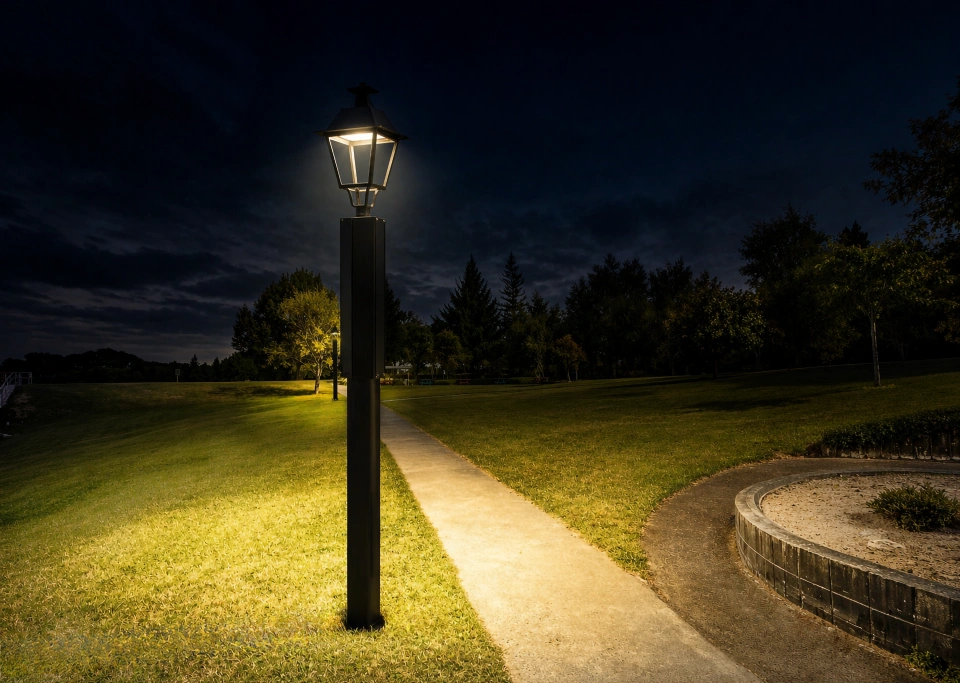
Solar Pathway & Park Lighting Design
Solar pathway and park lighting illuminates walkways, plazas, trails, and green spaces to pedestrian-appropriate levels using bollards or low-to-mid poles — sized to the worst month, designed to avoid tree shading, with no trenching or energy bills. This guide covers designing for pedestrians, the bollard-vs-pole choice, shading, and adaptive operation.
Designing for pedestrians
Pathways and parks need even, glare-free light at pedestrian scale for safety and wayfinding — not high roadway levels. Bollards provide low-level accent and guidance; poles give wider coverage and higher light for security and larger areas.
Solar-specific design
Each fixture's load is sized to the worst month with autonomy. The big factor in parks is shading — trees that shade panels cut harvest, so panel placement and tilt are chosen to capture sun (or split-panel mounting is used). Pathway/area optics spread light evenly along walkways.
Adaptive operation
Adaptive operation — a dimmed baseline with motion boost — extends autonomy and lowers the system size on low-traffic paths while preserving safety.
Where it fits
Trails, greenways, plazas, campus walkways, and park amenities far from power. 360 Solar designs pathway and park systems, including bollard and pole options.
Frequently asked questions
Bollards or poles?
Bollards for low-level wayfinding; poles for coverage and security.
How is shading handled?
Panel placement/tilt to capture sun, or split-panel mounting.
Do they work without trenching?
Yes — install anywhere the sun reaches, no wiring or bills.
Request a park/pathway layout at 360solarlighting.com/free-quote.