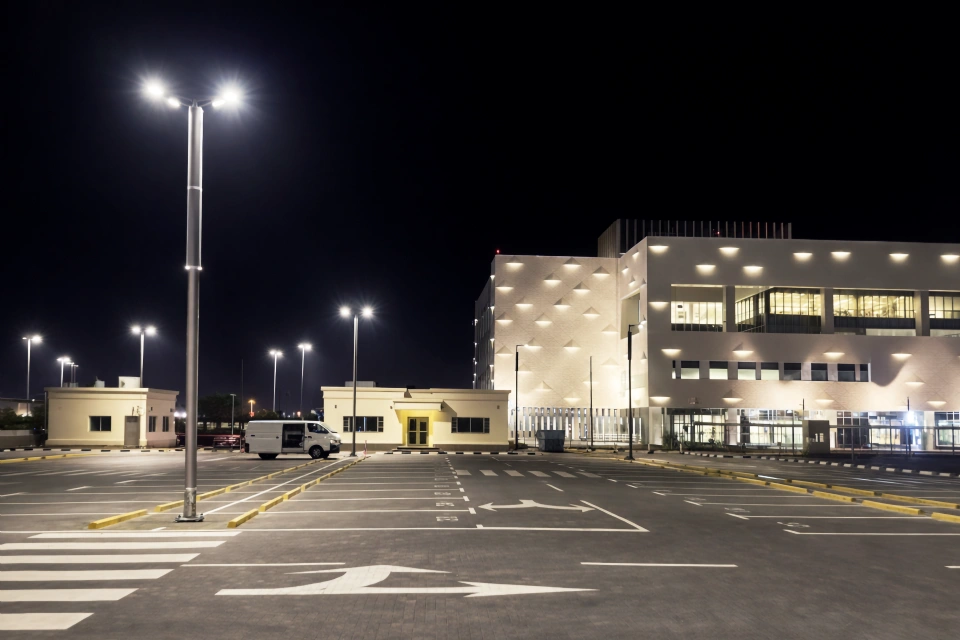
Solar Area Lighting (Shoebox) for Lots & Yards
Solar area ("shoebox") lighting illuminates parking lots, yards, and open commercial spaces from pole-mounted fixtures using Type III/IV/V optics to spread light evenly — sized to IES area light levels and the worst month, eliminating trenching and energy bills for any open-area lighting need. The shoebox form factor is the workhorse of commercial area lighting, and on solar it brings even, secure coverage to lots and yards that would be expensive to trench and wire.
This guide covers what shoebox lighting covers, the optics that deliver even coverage, and how the solar system is sized to match.
What it covers and how
Shoebox-style area fixtures light parking lots, storage yards, commercial campuses, and open spaces. The engineering goal is even coverage at the target IES level with no dark pockets — which matters for both safety (people can see) and security (no shadows for someone to hide in). That even coverage comes from the right optical distribution for each pole's position.
| Optic | Use |
|---|---|
| Type V | Symmetric spread for open areas (center of a lot) |
| Type III / IV | Perimeters and edges |
Type V optics throw light symmetrically in all directions, ideal for poles in the middle of an open lot, while Type III and IV push light forward for perimeter and edge poles. Mixing them across a lot is what eliminates dark pockets.
Solar sizing
Each fixture's load is sized to the worst month with autonomy, so the lot stays lit reliably through winter and cloudy stretches, not just summer. Adaptive operation (dim during quiet hours, boost on motion) cuts the load, allowing a smaller, more affordable system. Pole height and spacing follow the photometric layout, which sets exactly where poles go and how high to hold the IES level with no gaps. 360 Solar's Mercury and area/parking series cover these applications.
Frequently asked questions
What is solar area (shoebox) lighting?
Pole-mounted solar fixtures lighting lots, yards, and open spaces with Type III/IV/V optics, sized to IES levels and the worst month, with no trenching or energy bills.
Which optics do they use?
Type V spreads light symmetrically for open areas; Type III/IV suit perimeters and edges — the goal is even coverage with no dark pockets.
How is it sized?
Each fixture's load is sized to the worst month with autonomy, with adaptive operation cutting the load; pole height and spacing follow the photometric layout.
Where is it used?
Parking lots, storage yards, commercial campuses, and open spaces needing even area light at IES levels.
Why do dark pockets matter?
They undermine safety and security — even coverage at the IES level ensures people can see and there are no shadows for concealment.
Request a free area lighting layout for your lot or yard. Get it at 360solarlighting.com/free-quote.