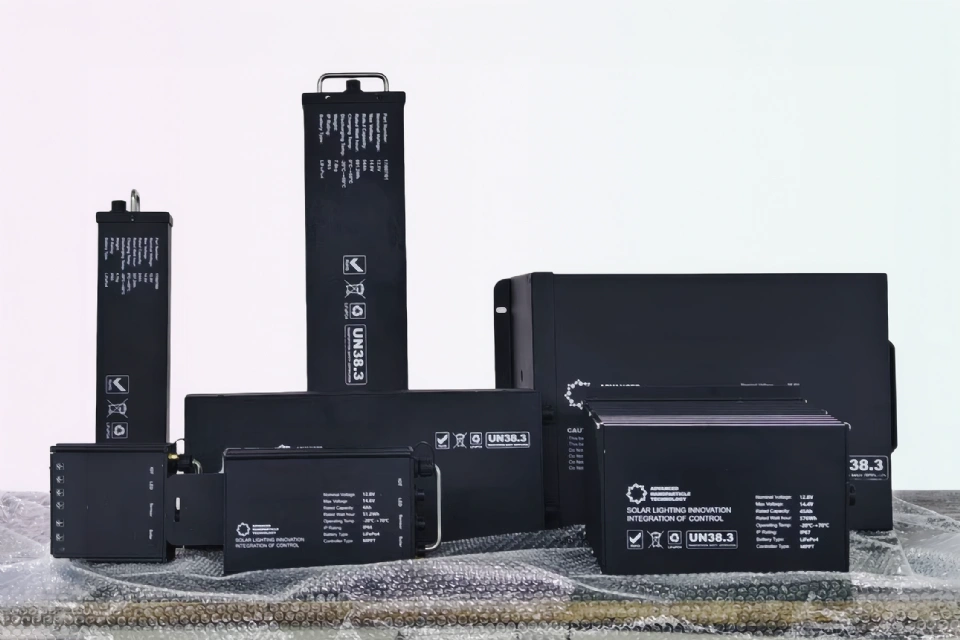
Battery Management Systems & Cycle Life in Solar Lighting
The battery management system (BMS) protects a solar lighting battery from the conditions that kill it — overcharge, over-discharge, and cold-temperature charging — and understanding the depth-of-discharge / cycle-life relationship is how you design for an 8–10 year battery instead of a 2-year one. The battery is the system's main consumable, so how it's protected and how hard it's worked determine the lifecycle cost.
This reference covers what a BMS does, the depth-of-discharge / cycle-life relationship, and temperature effects.
What a BMS does
The BMS monitors and protects the battery: preventing overcharge and over-discharge, balancing cells in lithium packs, managing temperature, and — critically for lithium — blocking charging below freezing, which would otherwise damage the cells. Without a competent BMS, even a good battery degrades quickly; with one, it reaches its rated life.
Depth of discharge and cycle life
Cycle life is strongly tied to depth of discharge (DoD): the less you drain a battery each cycle, the more cycles it delivers. Designing to a conservative DoD — not draining it flat each night — multiplies service life. This is why proper sizing is also a longevity strategy: a battery sized with reserve runs at shallower DoD and lasts far longer than one sized to the bare minimum and drained nightly.
Temperature
| Condition | Effect |
|---|---|
| Heat | Accelerates aging |
| Extreme cold | Reduces capacity; lithium can't charge without protection |
The design accounts for the site's temperature range, derating capacity and protecting against cold-charge damage. Because the battery is the main wear item — replaced periodically over a 20-year fixture life — its life drives the lifecycle cost. 360 Solar specifies BMS-protected batteries sized for conservative DoD.
Frequently asked questions
What does a BMS do?
It monitors and protects the battery — preventing overcharge and over-discharge, balancing cells, managing temperature, and blocking lithium charging below freezing.
How does depth of discharge affect cycle life?
The less you drain each cycle, the more cycles you get — conservative DoD multiplies service life, turning a 2-year battery into an 8–10-year one.
How does temperature affect solar batteries?
Heat accelerates aging; extreme cold reduces capacity and prohibits lithium charging without protection — the design derates and protects accordingly.
Why does the battery drive lifecycle cost?
It's the main wear item, replaced periodically over the fixture's 20-year life, so its life (set by DoD and temperature) drives total cost.
Can proper sizing extend battery life?
Yes — sizing with reserve runs the battery at shallower DoD, significantly increasing cycle life.
Ask about battery sizing and life for your project. Get it at 360solarlighting.com/free-quote.