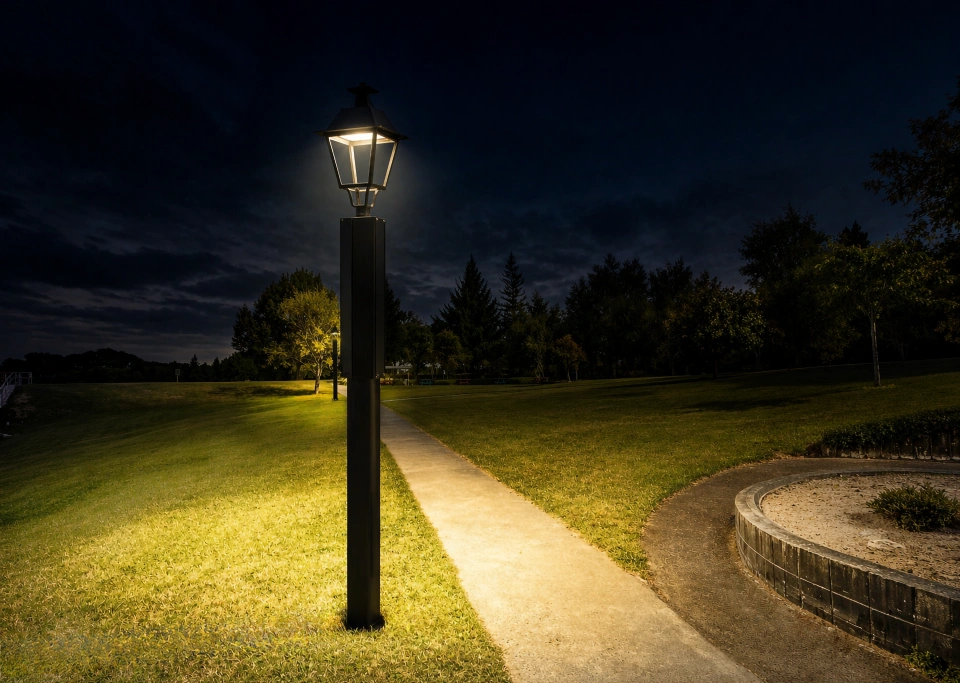
Solar Lighting for Campuses & Universities
Campuses use solar lighting for pathways, parking, quads, and remote areas to improve safety and meet sustainability goals off-grid — avoiding disruptive trenching across landscaped grounds, eliminating energy bills, and contributing measurable carbon savings for the institution's ESG reporting. For a university, solar hits three priorities at once: safer grounds, undisturbed landscape, and visible progress on climate commitments.
This guide covers why campuses choose solar, where it's applied, and the shading and sizing factors that make a campus deployment reliable.
Why campuses choose solar
Universities want three things from outdoor lighting that often conflict on a grid system: safe, well-lit pathways and lots for students walking after dark; minimal disruption to carefully landscaped grounds; and progress toward sustainability commitments. Trenching electrical across quads and green spaces works against the second goal and does nothing for the third. Solar delivers all three — no trenching across the quad, no energy bills, and quantifiable emissions savings that go straight into ESG and climate-action reporting.
Applications across the campus
| Area | Solar approach |
|---|---|
| Pathways & quads | Pedestrian-scale, glare-free light |
| Parking lots | IES levels with adaptive operation |
| Remote / perimeter | Security lighting, often on smart poles |
Many campus deployments add smart poles carrying cameras and Wi-Fi, extending campus safety and connectivity to areas that would otherwise need both power and data trenched in.
Design for the campus environment
The main design factor on a campus is shading — mature trees and tall buildings cast shadows that cut panel harvest, so panel placement and tilt are chosen to avoid them (or split-panel mounting is used). Systems are sized to the worst month with autonomy for year-round reliability through the academic calendar, and adaptive operation manages the load across pathways, lots, and quads. 360 Solar designs campus lighting and provides the sustainability metrics institutions need for reporting.
Frequently asked questions
Why do campuses use solar lighting?
For safe pathways and lots, minimal disruption to grounds, and sustainability progress — solar provides all three with no trenching, no bills, and measurable emissions savings.
Where is it used on campus?
Pathways and quads, parking lots (with adaptive operation), and remote or perimeter security areas, often with smart poles adding cameras and Wi-Fi.
How does it support ESG goals?
By replacing grid electricity with on-site solar, it contributes measurable carbon savings an institution can report against its commitments.
What design factors matter?
Accounting for tree and building shading in panel placement, sizing to the worst month with autonomy, and using adaptive operation.
Can solar handle campus parking lots?
Yes — area optics light lots to IES levels, with adaptive operation and worst-month sizing keeping the system efficient.
Request a free campus lighting layout with sustainability metrics. Get it at 360solarlighting.com/free-quote.