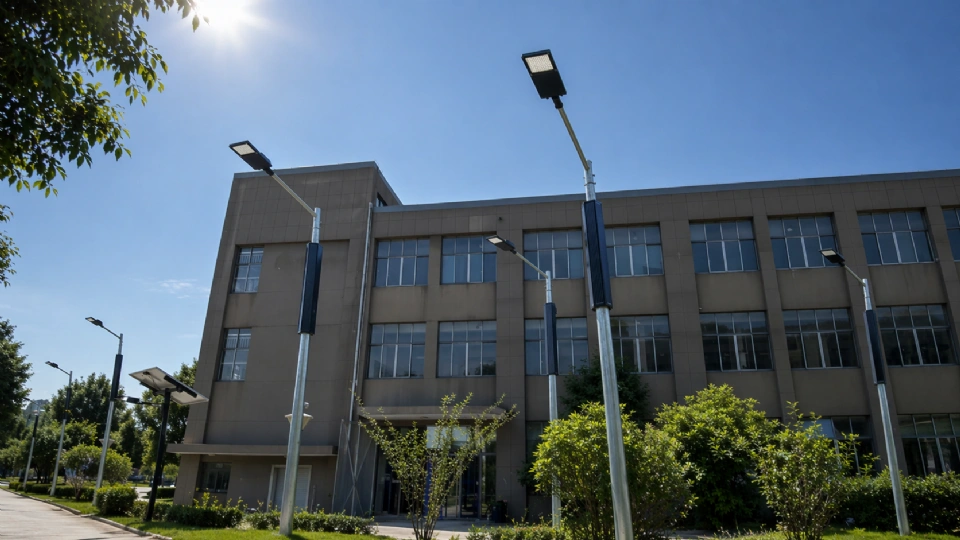
Solar Lighting for Military & Government Facilities
Military and government facilities use solar lighting for perimeters, gates, parking, and remote sites to gain energy independence, resilience during grid outages, and off-grid deployment. These projects often require domestic-content (BAA/BABA) compliance, durable IP66/IK fixtures, and smart-pole security integration. For a sector where reliability and security are paramount and grid dependence is a vulnerability, solar offers a compelling combination of independence and durability.
This guide covers why government and military sites choose solar, the compliance and durability requirements, and how autonomy is sized for critical sites.
Why government and military
These sites prioritize four things that solar directly supports: resilience (lighting that keeps working during grid outages or attacks on infrastructure), energy independence (no reliance on a utility that could fail or be targeted), rapid off-grid deployment (lighting that can be installed at gates, perimeters, and forward sites without running power), and security. Solar reduces dependence on vulnerable grid infrastructure while delivering all of these.
Requirements
| Requirement | What it means |
|---|---|
| BAA/BABA compliance | Domestic content, frequently mandatory — US-assembled fixtures qualify |
| Durability | IP66/IK ratings and corrosion resistance for harsh sites |
| Security integration | Smart poles with cameras and sensors for perimeter security |
| Resilience | Adequate autonomy and optional hybrid power |
Domestic content (BAA/BABA) is often a hard requirement on government and military work, so US-engineered and assembled fixtures with compliance documentation qualify where many overseas products cannot. Durability matters because these sites are frequently harsh — IP66/IK-rated, corrosion-resistant fixtures hold up. And smart poles extend perimeter security with integrated cameras and sensors.
Sizing for criticality
For critical sites, autonomy is sized generously — to the worst month with extra autonomy — so lighting and any integrated security stay online through extended cloudy periods and outages, with optional hybrid power for the highest-criticality applications. Compliance is documented for the project file. 360 Solar designs for government and military requirements, including BAA/BABA documentation.
Frequently asked questions
Why do government and military sites use solar?
For resilience during outages, energy independence, rapid off-grid deployment, and security — solar delivers all of these and reduces grid dependence.
Does it need Buy American compliance?
BAA/BABA compliance is frequently mandatory, so US-assembled fixtures with documentation qualify while many overseas products don't.
What durability is required?
IP66/IK-rated, corrosion-resistant fixtures for harsh sites, plus smart-pole security integration and resilient autonomy.
How is autonomy sized for critical sites?
To the worst month with extra autonomy so lighting and security stay online through extended cloudy periods and outages, with optional hybrid power.
Can solar lighting integrate with site security systems?
Yes — smart solar poles can power and connect cameras and sensors for perimeter security, sized into the solar load.
Request a free government/military solar lighting layout with compliance documentation. Get it at 360solarlighting.com/free-quote.