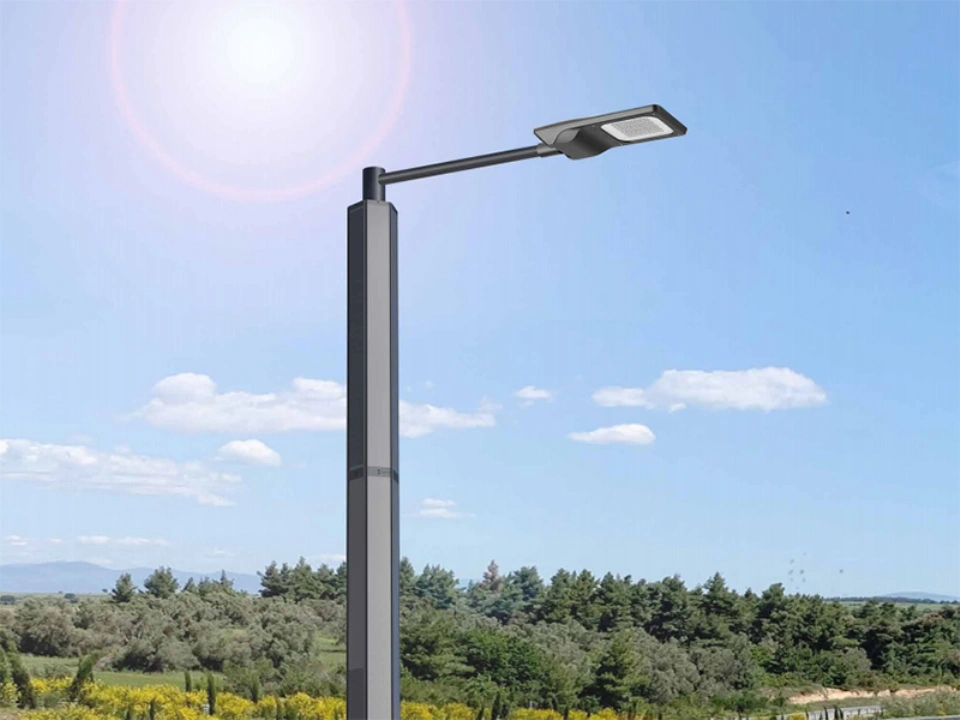
Solar Lighting for Transit Stops & Stations
Solar lighting for bus stops, rail platforms, and park-and-ride lots improves rider safety and visibility off-grid — installing without trenching to often-remote stops, running through grid outages, and optionally powering signage, real-time displays, or security cameras on a smart pole. For a transit agency, it turns a dark, hard-to-power stop into a safe, self-sufficient amenity without the cost and disruption of running electrical to every location.
This guide covers why transit needs solar, what a smart pole can add, and how the system is sized for variable ridership.
Why transit needs it
Bus stops and platforms are frequently far from convenient power, scattered along routes and at the edges of developed areas — and rider safety depends on reliable light, especially for early-morning and late-night riders. Solar lights these stops without trenching, carries no energy bills, and — critically — keeps working during grid outages, exactly when a dark, unstaffed stop would feel least safe. That resilience is a real advantage over grid-tied stop lighting.
Functions a smart pole adds
A solar transit pole can be more than a light. Sized into the solar load, it can power:
| Device | Rider benefit |
|---|---|
| Real-time arrival displays | Know when the next bus or train arrives |
| Signage lighting | Stop and route information visible at night |
| Security cameras | Safety and deterrence at the stop |
| Emergency call buttons | Direct help when needed |
Each device adds to the power budget, so it's accounted for in the solar sizing rather than bolted on as an afterthought.
Sizing for variable ridership
Light levels follow the application — shelter task lighting at a stop, parking levels at a park-and-ride — and the system is sized to the worst month with autonomy for year-round reliability. Because ridership varies through the night, adaptive operation conserves energy during low-traffic hours while preserving a safe minimum, which lets the system stay compact. 360 Solar designs transit lighting and smart-pole integrations.
Frequently asked questions
Why use solar lighting at transit stops?
Stops and platforms are often far from power, and rider safety needs reliable light. Solar lights them without trenching, with no bills, and keeps working during outages.
What can a solar transit smart pole power?
Real-time arrival displays, signage lighting, security cameras, and emergency call buttons — each sized into the solar load.
How is it sized?
Light levels follow the application (shelter or park-and-ride), sized to the worst month with autonomy, with adaptive operation for low-traffic hours.
Does it work during power outages?
Yes — running on stored battery energy, it keeps stops and platforms lit during grid outages, when safety matters most.
Can solar handle a large park-and-ride lot?
Yes — area optics and adaptive operation light parking to IES levels, with the system sized for the lot's load and worst month.
Request a free transit lighting layout. Get it at 360solarlighting.com/free-quote.