Solar Lighting vs Trenching: Cost for Parks & Pathways
For parks and pathways, solar lighting is frequently cheaper than running new electrical — because trenching across landscape and pavement costs tens of thousands of dollars plus permitting and restoration, all of which solar avoids, along with ongoing energy bills. The longer the trench, the bigger solar's advantage. Parks are, in fact, one of the clearest cases for solar, because their fixtures so often sit far from any convenient power source.
This guide explains why parks favor solar, and the shading and sizing design points that make an off-grid park installation reliable.
Why parks favor solar
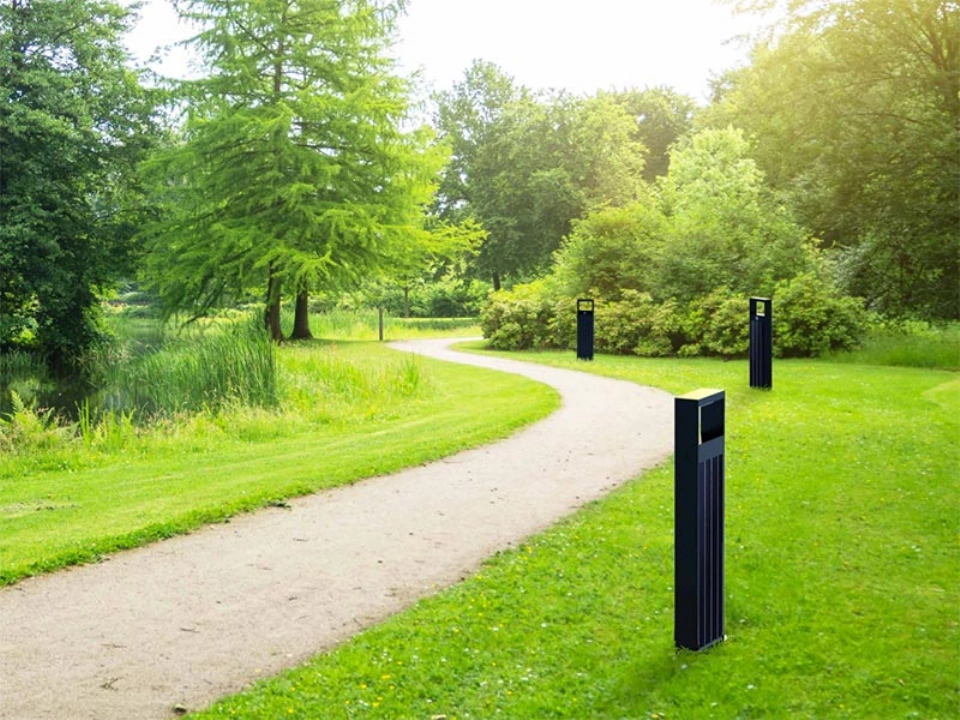
Park and pathway fixtures are typically scattered across large green spaces — along trails, around plazas, through parking — and often far from a power source. Trenching electrical those distances means digging across grass, around tree roots, and through walkways, then restoring everything afterward. That's expensive, slow, and disruptive to a public space. Solar sidesteps all of it: a solar fixture installs anywhere the sun reaches, with no wiring back to a panel and no monthly electric bill. The economics tilt further toward solar with every additional foot of trench avoided.
The cost picture
| Cost | Trenched grid | Solar |
|---|---|---|
| Trenching across landscape | High (tens of thousands) | None |
| Permitting & restoration | Yes | Minimal |
| Energy bills | Ongoing | None |
| Disruption to the park | Significant | Low |
For typical park runs, solar's total cost is competitive to clearly lower — and the disruption avoided has its own value for a public amenity that residents are using.
Design considerations
Off-grid park lighting is engineered, not just dropped in. Each fixture is sized to its IES light level (pathways, plazas, and parking each have appropriate pedestrian or area targets) and to the worst month with autonomy, using pathway or area optics that spread light evenly and glare-free. The one factor unique to parks is tree shading: trees that shade a panel cut its harvest, so panel placement and tilt are chosen to avoid canopy shadow, and adaptive operation can extend autonomy on low-traffic paths. 360 Solar designs park and pathway lighting and can compare solar against trenching for your site.
Frequently asked questions
Is solar cheaper than trenching for parks?
Frequently yes — trenching across landscape and pavement costs tens of thousands plus permitting and restoration, all of which solar avoids along with energy bills. Longer trenches favor solar more.
Why do parks favor solar?
Park fixtures are often far from power, so trenching across grass, trees, and walkways is costly and disruptive. Solar installs anywhere with sun, no wiring or bills.
What design factors matter?
Sizing to the IES level and worst month, pathway/area optics, adaptive operation, and avoiding tree shading in panel placement.
How does trench length affect the comparison?
The longer the distance from power, the more trenching costs and the more solar wins. Short runs near power may still favor grid.
Does tree shading make solar impractical in parks?
No — panels are placed and tilted to avoid canopy shade, and split-panel mounting or relocation handles most situations.
Request a free parks/pathway solar estimate and trenching comparison. Get it at 360solarlighting.com/free-quote.