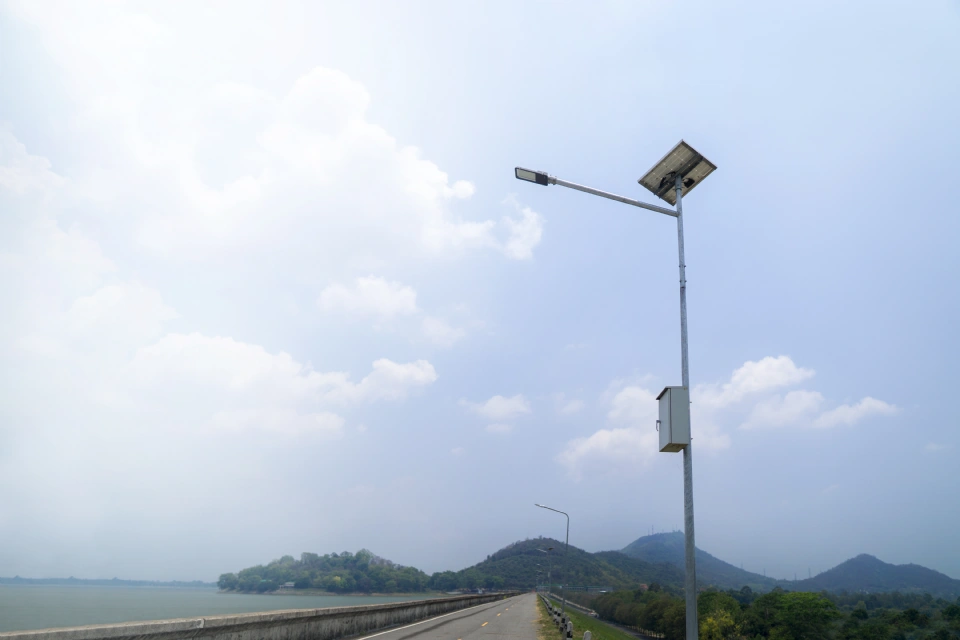
Solar Roadway Lighting & DOT Requirements
Solar roadway lighting earns DOT approval the same way grid lighting does — by meeting IES RP-8/AASHTO light-level, uniformity, and glare standards for the road classification. Solar doesn't change the target; it changes how the fixture is powered. This guide covers the standards, roadway optics, the solar engineering, and the documentation DOT projects require.
Standards first
DOT and municipal roadway projects design to IES RP-8 (and AASHTO) using an illuminance method (footcandles/lux on the pavement) or a luminance method (cd/m² as the driver sees it), plus uniformity and veiling-luminance (glare) limits by road and pedestrian classification.
Roadway optics
Meeting the target requires roadway distributions — Type II for narrower roads, Type III for general roadway — that spread light along the road with controlled backlight and glare. Pole spacing and mounting height are modeled to satisfy the classification's uniformity.
The solar engineering
Once the fixture meets RP-8/AASHTO, the system is sized worst-month with autonomy and MPPT control to run reliably year-round. Down-speccing the light to ease the solar math fails the standard.
Documentation
DOT projects require the photometric report, structural compliance, and often domestic-content (BABA) and warranty documentation. 360 Solar designs roadway projects to RP-8/AASHTO and supports the documentation.
Frequently asked questions
Do solar lights meet DOT standards?
Yes, with an RP-8/AASHTO-compliant design and proper sizing.
What optics are used?
Type II/III roadway distributions with controlled glare.
Are they bright enough?
Yes — light level is set by the standard, not the power source.
Request a DOT-compliant roadway design at 360solarlighting.com/free-quote.