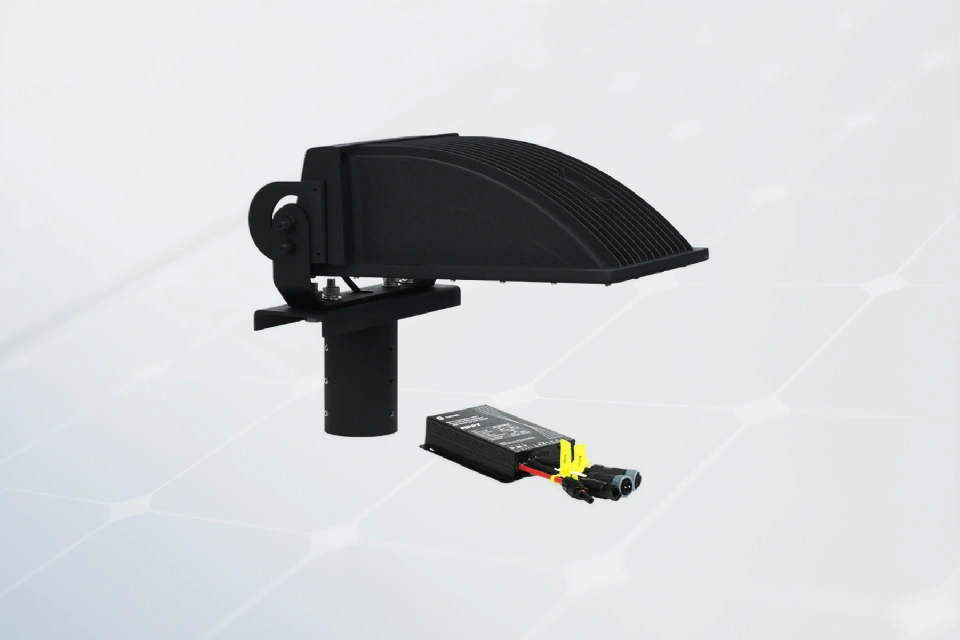
Solar Sports & Court Lighting (Off-Grid)
Off-grid solar sports and court lighting suits recreational and remote courts and fields where trenching is costly — eliminating wiring and energy bills — with output and run-hours bounded by panel and battery sizing. Recreational solar courts are increasingly viable; high-output competition play still favors grid. The key is matching the application to what solar can reliably deliver: it's an excellent fit for a park court far from power, and a poor fit for a broadcast stadium.
This guide covers where solar sports lighting fits, how the higher load is sized, and where grid remains the right call.
Where solar sports fits
The ideal candidates are recreational courts, remote parks, and sites far from power. These are exactly the places where trenching electrical is expensive and disruptive, and where recreational light levels (around 30 fc) are well within a properly sized solar system's reach. Solar lights them without wiring and runs them on stored energy, with no monthly bill — a strong fit for community courts, park fields, and resort or campus recreation areas.
Sizing for the sports load
Sports fixtures draw more power than pathway lights, so the solar system is sized for that higher nightly load plus autonomy. The lever that makes this practical is adaptive operation: lights come up when courts are in use and dim or switch off otherwise, which suits scheduled play and stretches autonomy considerably. The photometric design confirms the light levels are met, and the energy design confirms the run-hours the system can support — both done to the worst month with autonomy.
| Application | Solar fit |
|---|---|
| Recreational / remote courts | Strong — off-grid, ~30 fc, scheduled use |
| High-output competition / broadcast | Grid favored — sustained high load |
Where grid still wins
High-level competition — with high footcandles, long operating hours, and broadcast requirements — demands more sustained power than a solar system can practically store and recharge each day. For those venues, grid output remains the right choice. Being honest about this boundary is part of good engineering: solar is genuinely excellent for recreational and remote courts, and grid is genuinely better for high-output competition. 360 Solar's Patriot solar system suits recreational and remote court applications.
Frequently asked questions
Where does off-grid solar sports lighting fit?
Recreational and remote courts and fields where trenching is costly — recreational courts target ~30 fc. High-output competition still favors grid.
Can solar power sports lighting?
Yes for recreational levels — sized for the higher nightly load plus autonomy, often with adaptive operation lighting courts only when in use.
Why does competition favor grid?
High footcandles, long hours, and broadcast needs require more sustained power than solar can practically store, so grid is used for those venues.
How is solar sports lighting sized?
The photometric design confirms light levels and the energy design confirms run-hours, sizing panel and battery to the sports load and worst month with autonomy.
Does adaptive operation hurt playability?
No — lights come to full output when courts are in use; dimming or off only applies when courts are empty, conserving energy without affecting play.
Request a free solar court layout and energy design. Get it at 360solarlighting.com/free-quote.