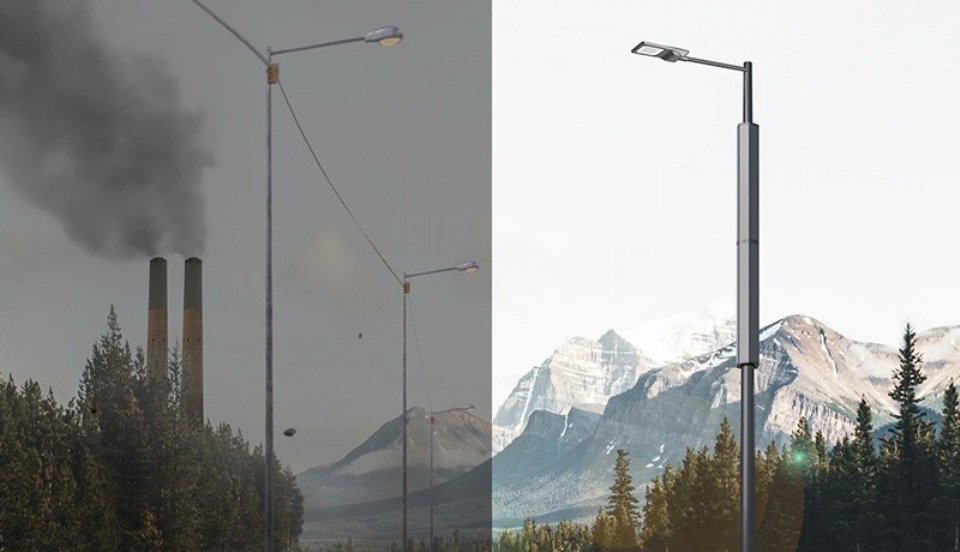
Solar vs Grid-Tied Street Lighting: TCO Compared
Over a 20-year life, solar street lighting often beats grid-tied on total cost once you include trenching, conduit, metering, and energy bills — costs solar avoids entirely. Grid wins where power is immediately adjacent and rates are low; the longer the run and higher the rates, the stronger solar's total-cost advantage.
This comparison frames the total-cost decision.
At a glance
| Grid-tied | Solar | |
|---|---|---|
| Output | Unlimited | Engineered to the load |
| Install | Trenching + hookup | No trenching |
| Operating cost | Ongoing energy bills | Zero energy bills |
| 20-year TCO | Higher on many sites | Often lower |
How to choose
Choose grid where power is immediately adjacent, rates are low, and output demand is very high — so trenching is minimal and the energy cost small. Choose solar for long runs, remote sites, or where predictable zero-energy costs and no trenching are valued. The decisive factors are run length (trenching avoided) and electricity rate (bills avoided): the longer and pricier, the more solar wins on 20-year total cost. A site-specific TCO comparison settles it with real numbers. (360 Solar is a Duvon company.)
Frequently asked questions
Is solar or grid-tied street lighting cheaper over 20 years?
Solar often wins once trenching, conduit, metering, and energy bills are counted. Grid wins where power is adjacent and rates are low.
What costs does grid-tied include?
A lower fixture price but trenching and conduit, hookup and metering, and ongoing energy bills.
When does grid win?
Where power is adjacent, rates are low, and output demand is very high.
When does solar win?
For long runs, remote sites, or where zero-energy costs and no trenching are valued.
How do I get a definitive answer?
A site-specific 20-year TCO comparison using run length and electricity rate settles it.
Request a TCO comparison. Get it at 360solarlighting.com/free-quote.